In diesem Artikel
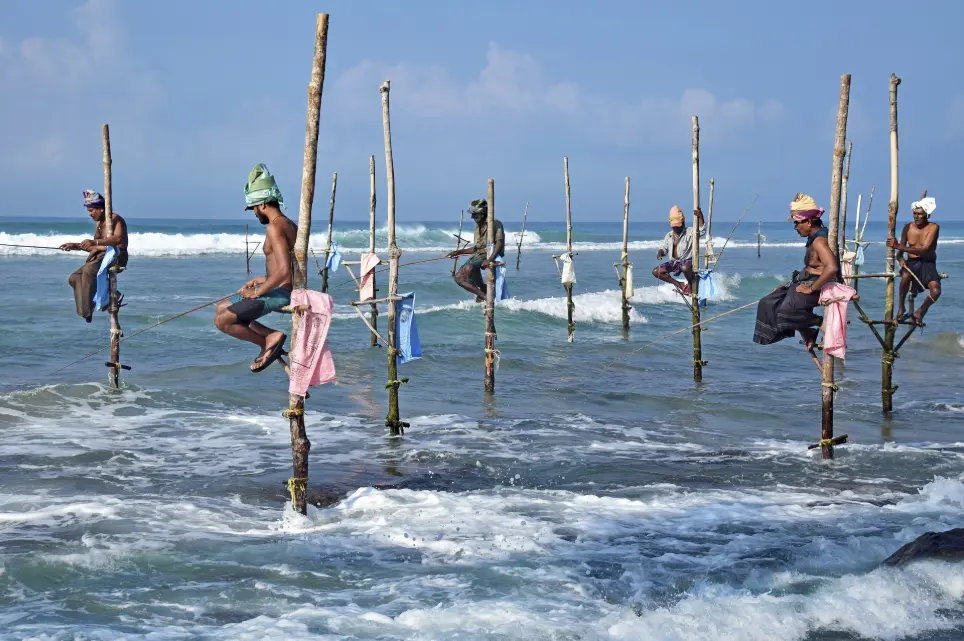
Eines der ikonischsten Bilder Sri Lankas ist das eines einsamen Fischers, der auf einen in den Meeresboden gerammten Holzpfahl sitzt und seine Angel in die Brandung wirft. Diese traditionelle Fischmethode, bekannt als Stelzenfischen, ist synonym für die sri-lankische Küstenkultur geworden.
Ursprünge des Stelzenfischens
Das Stelzenfischen entstand in den 1940er Jahren, nachdem die Korallenriffe der Insel durch einen massiven Zyklon beschädigt wurden. Fischer brauchten eine Möglichkeit, tieferes Wasser ohne Boote zu erreichen, also rammten sie Holzpfähle in den flachen Meeresboden und ließen sich darauf nieder, um ihre Angeln auszuwerfen. Was als Notwendigkeit begann, wurde zu einer beliebten Tradition, die durch Generationen weitergegeben wird.
Wo man Stelzenfischen sehen kann
Die besten Orte, um das Stelzenfischen zu bezeugen, liegen an der Südküste, besonders in den Dörfern Koggala, Kathaluwa und Ahangama. Früher Morgen (ca. 6-8 Uhr) und spätter Nachmittag sind die besten Zeiten, um Fischer bei der Arbeit zu sehen, da sie die Mittagshitz meiden.
Die Technik
Fischer sitzen auf einer Querstange, die an einen senkrechten Pfahl befestigt ist, manchmal 2-3 Meter über dem Wasser. Sie verwenden einfache Angeln mit angebrachten Leinen und kleinen korbartigen Netzen, um kleine Fische wie Heringe und Makrelen zu fangen. Die Fähigkeit liegt im Erhalt des Gleichgewichts beim Auswerfen und Einholen des Fangs - alles während sie precär über den Wellen thronen.
Kulturelle Bedeutung heute
Während moderne Fischmethoden das Stelzenfischen für kommerzielle Zwecke größtenteils ersetzt haben, bleibt es ein wichtiges kulturelles Symbol. Viele Fischer arbeiten heute mit dem Tourismus zusammen und erlauben Besuchern, sie zu fotografieren oder sogar selbst den precären Sitz zu probieren (gegen eine kleine Gebühr). Dies hat dazu beigetragen, die Tradition für künftige Generationen zu bewahren.
Naturschutz-Bedenken
Die Praxis ist aufgrund von Überfischung, Schäden an Korallenriffen und des Tsunamis 2004, der viele Stelzenfischerei-Standorte zerstörte, zurückgegangen. Naturschutzmaßnahmen sind im Gange, sowohl das Fischerei-Erbe als auch die Meeresökosysteme, die es unterstützen, zu schützen.
Photography Tips
- • Bring a telephoto lens for close-up shots without disturbing fishermen
- • Golden hour (sunrise/sunset) provides the best lighting
- • Always ask permission before taking photos
- • Expect to pay a small fee for posed photographs
- • Respect the fishermen's space and concentration
Want to witness this incredible tradition firsthand? Our southern coast tours include visits to authentic stilt fishing villages with opportunities to meet the fishermen and capture stunning photographs.