In this article
Sri Lankan food is far more nuanced than “spicy curry.” Rice, coconut, curry leaves, lime, chilli and roasted spices become meals in which several small preparations balance one another. Creamy dhal softens a dark meat curry, tart pol sambol adds freshness, mallung brings leafy flavour and papadam supplies crunch. That balance defines Sri Lankan cuisine.
Sri Lanka cuisine at a glance
- •Core meal: rice with several Sri Lankan curries, sambols and vegetables.
- •Key ingredients: coconut, chilli, curry leaves, pandan, lime, cinnamon, pepper, cumin and coriander.
- •Essentials: rice and curry, hoppers, string hoppers, kottu, pol sambol and watalappan.
- •Plant-based: abundant, but ask whether sambols or curries contain dried fish, stock, egg or ghee.
What makes Sri Lankan cuisine distinctive?
Historic trade connected Sri Lanka with South Indian, Malay, Arab, Portuguese and Dutch-Burgher food traditions. Yet the cuisine remains distinct: coconut appears as milk, cream and fresh flesh; spices are often roasted; and rice and curry means a composition rather than one sauce. Northern Jaffna cooking, coastal seafood, highland vegetables and Burgher dishes such as lamprais add strong regional identities.
18 essential Sri Lankan dishes
1. Rice and curry
Rice with several vegetable, lentil, fish or meat curries and a sambol—the defining everyday Sri Lankan dish.
2. Hoppers (appa)
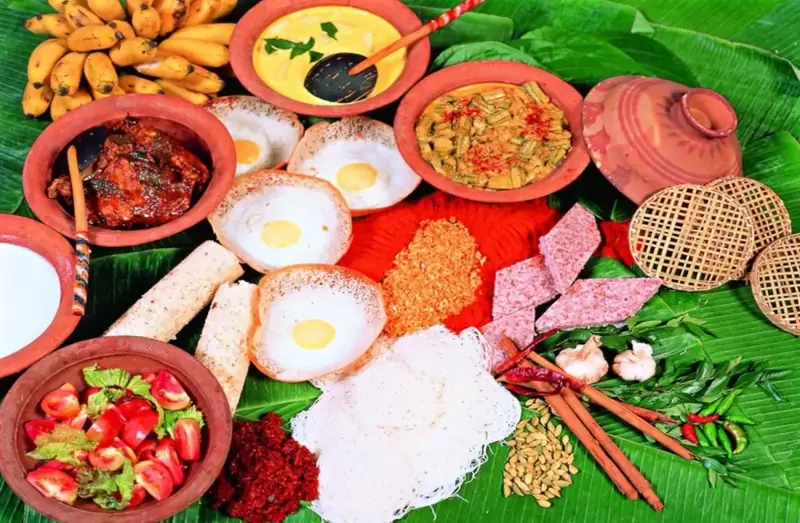
Bowl-shaped fermented rice pancakes, plain or cooked with an egg, usually paired with lunu miris.
3. String hoppers
Steamed rice-noodle nests served with kiri hodi, dhal and coconut sambol.
4. Kottu roti
Chopped godamba roti stir-fried with vegetables, egg and optional meat—the soundtrack of evening street food.
5–6. Pol roti and kiribath
Savoury coconut flatbread; and ceremonial coconut-milk rice cut into diamonds.
7–9. Parippu, ambul thiyal and Jaffna crab
Comforting dhal; sour-peppery dry fish curry; and an intense northern crab curry.
10–12. Polos, wambatu moju and mallung
Young jackfruit curry, sweet-sour aubergine pickle and finely chopped greens with coconut.
13–15. Lamprais, pittu and short eats
A baked banana-leaf rice parcel, steamed rice-coconut cylinders, and snacks such as rolls, patties and vadai.
16. Isso wade
A crisp lentil fritter topped with prawns, associated with seaside snacking.
17–18. Watalappan and curd with treacle
Spiced coconut-jaggery custard; and buffalo curd with sweet kithul syrup.
Sambols explained: pol sambol, coconut sambal and lunu miris
Sambols are concentrated condiments, not standalone curries. Pol sambol literally means coconut sambol and normally combines fresh grated coconut, red chilli, lime, red onion and salt; some versions include Maldive fish. Searches for coconut sambol and coconut sambal usually refer to it. “Sambol” is the common Sri Lankan spelling, while “sambal” is more familiar across Southeast Asia. Lunu miris is mainly chilli and onion; seeni sambol is slow-cooked sweet-hot onion; katta sambol is stronger and may contain fish.
Sri Lankan curries: white, red, black and pepper
White curries tend to feature coconut milk and gentler seasoning. Red curries gain colour and heat from chilli. Black curries use deeply roasted coriander, cumin and fennel for dark, nutty complexity. Pepper curries foreground freshly ground pepper. A menu’s “mild” curry can still be hot by European standards, so ask specifically for less chilli.
How to choose a restaurant in Sri Lanka
The best restaurant in Sri Lanka is not necessarily expensive. A business called a “hotel” may simply be a local eatery. Good restaurants in Sri Lanka are busy at meal times, replenish food frequently and specialise rather than offering every cuisine. Rice and curry has its broadest selection at lunch; hoppers commonly appear at breakfast or dinner; kottu is mainly an evening dish.
- •Colombo: everything from local lunch counters to contemporary Sri Lankan cuisine.
- •Kandy and the hills: rice and curry, hoppers, vegetables and tea.
- •North and east: Tamil-influenced curries, string hoppers and seafood.
- •South and west: fish, ambul thiyal, crab and beach restaurants; agree prices before ordering.
Vegetarian food, allergies and dining safely
Vegetable curries, dhal, mallung, polos and coconut dishes make Sri Lanka food highly plant-friendly, but dried fish, fish stock, egg, ghee and shared cooking surfaces may occur. State each ingredient you avoid. For coeliac disease or severe allergies, “gluten-free” alone is insufficient: kottu and roti contain wheat and cross-contact is possible. Choose freshly cooked, steaming-hot food, busy eateries and sealed or reliably filtered water.
Sri Lanka Food Truck Heidelberg
German searches for “Sri Lanka Food Truck Heidelberg” usually refer to Kokiya, a mobile rice-and-curry vendor. Food-truck locations, opening days and menus change, so check the provider’s current weekly schedule or a live Heidelberg food-truck calendar before travelling. This is a search-intent note, not a guarantee of a permanent location.
Eating etiquette
Traditionally, diners wash their hands and eat with the fingertips of the right hand, mixing a small amount of rice with curries and using the thumb to guide it. Asking for cutlery is completely acceptable. Let your host or server help with unfamiliar Sri Lankan dishes and taste sambols in small amounts before adding more.
Taste Sri Lankan cuisine on your journey
We can connect local restaurants, markets and an optional cooking class with your private route, matching spice preference and dietary needs.
Plan a food-focused tourSri Lankan food FAQs
What is the best-known Sri Lankan dish?
Rice and curry is the defining daily meal: rice with several curries, vegetables and sambol. Kottu and hoppers are also widely recognised.
What is pol sambol?
Pol sambol is a fresh coconut relish made with grated coconut, chilli, lime, onion and salt. Some recipes include Maldive fish.
Is Sri Lankan cuisine always spicy?
No. Dhal, kiri hodi and some white curries are gentler, while sambols and red curries can be very hot.
Is Sri Lankan food vegan-friendly?
There are many options, but apparently plant-based curries and sambols may contain fish, egg, ghee or stock. Ask specifically.
When are hoppers and kottu served?
Hoppers commonly appear at breakfast or dinner. Kottu is usually an evening food.
How do I find good Sri Lanka restaurants?
Look for local turnover at meal times, freshly replenished dishes and a focused menu. Recent reviews help, but inspect cleanliness and food temperature yourself.