In this article
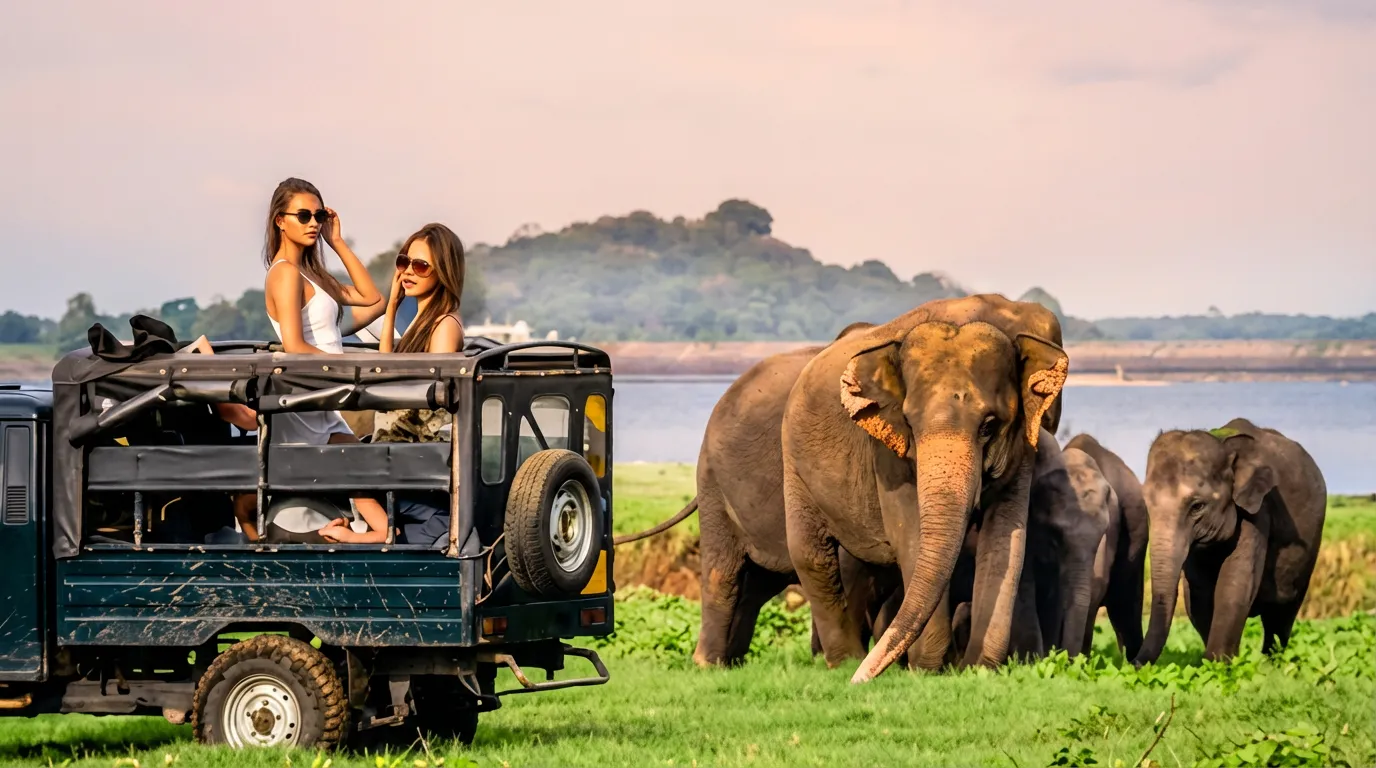
The Minneriya Elephant Gathering is one of Sri Lanka's most impressive natural events. During the dry season, wild Asian elephants gather along the shores of the Minneriya reservoir to graze, drink and interact. The best time to visit is traditionally between July and September, particularly August and September. However, rainfall, water levels and the animals' movements between Minneriya and Kaudulla have a significant effect on sighting opportunities. A late-afternoon safari often offers good viewing conditions, but large elephant herds are never guaranteed. Flexible planning and a respectful distance can open the door to one of Asia's most fascinating wildlife experiences.
Key takeaways
- The traditional Gathering season runs from July to September, particularly August and September. Rainfall, water levels and food availability affect sightings.
- Elephants move between Minneriya, Kaudulla and Hurulu. Whenever possible, choose your park based on recent sightings.
- A half-day safari usually lasts around three to four hours; late afternoon is often particularly rewarding for the Gathering.
- The total price includes at least park admission, taxes, the Jeep and the driver; confirm current amounts in writing before booking.
- A good safari keeps its distance, does not block animals and avoids joining clusters of Jeeps around a single herd.
What is the Minneriya Elephant Gathering?
The Elephant Gathering is the seasonal concentration of large numbers of wild Asian elephants (Elephas maximus) around the Minneriya reservoir in central Sri Lanka.
This natural phenomenon takes place in Minneriya National Park, between Habarana and Polonnaruwa in the island's Cultural Triangle.
As the water level drops during the dry season, extensive grasslands emerge along the shores. These provide food for the elephants, while the remaining water continues to serve as a drinking source.
The animals come from surrounding forests and use different habitats at different times of year. This is therefore not a single migration with a fixed schedule, but a changing concentration of elephants searching for suitable food and water sources.
How many elephants gather in Minneriya?
Historical accounts describe gatherings of several hundred elephants. Sri Lanka's tourism authority reports sightings ranging from around 100 to several hundred animals, while 200 to 300 elephants is often cited as the scale of particularly large gatherings.
These numbers are not a daily expectation and must not be treated as a guarantee for any particular safari.
A scientific study covering 2019 to 2020 already recorded fewer elephants than earlier observations. The researchers identified a relationship between the available grassland and the number of elephants present.
The current ecological conditions therefore matter more than the often-advertised maximum number.
Which elephants live in Minneriya?
The national park is home to Sri Lankan elephants, generally classified as Elephas maximus maximus, a subspecies of the Asian elephant.
The IUCN classifies the Asian elephant as Endangered globally. Habitat loss and the increasing fragmentation of suitable habitats are among the main threats.
Under favourable conditions, a safari can reveal a range of social behaviours: females with calves in family groups, youngsters playing, groups feeding or adult bulls moving alone.
Every encounter should be guided by the animals' natural behaviour, rather than the desire for the closest possible photograph.

Minneriya Elephant Gathering: When is the best time to visit?
The best chances of seeing large elephant gatherings are traditionally between July and September, often particularly in August and September.
These months fall within the region's dry season. Nevertheless, rainfall and water management can shift the timing or location of the Gathering.
Sri Lanka's official tourism authority identifies a broader period from May to October as an interesting time to visit. This does not mean that equally large groups can be seen throughout that entire period.
Seasonal overview by month
| Period | Typical situation | Assessment |
|---|---|---|
| January to March | Elephants are often more dispersed; Hurulu may be worth considering | Gathering unlikely |
| April to June | Transition period; conditions may improve as water levels fall | Variable |
| July | Larger gatherings often begin | Traditionally a good time to visit |
| August to September | Historically the main Gathering months | Particularly recommended |
| October | Rain and movements towards Kaudulla are possible | Highly dependent on conditions |
| November to December | Herds are often distributed elsewhere | Check alternatives |
This table shows typical seasonal patterns, not a current sighting forecast. Water levels and elephant movements can vary considerably from year to year.
Why is the dry season so important?
The Minneriya reservoir is a historic irrigation tank built in the third century AD under King Mahasena.
Three interacting factors help explain its importance to the Gathering.
First, water remains available while other water sources in the surrounding landscape may shrink seasonally. Second, falling water levels expose open shoreline areas with fresh grass. Third, these open areas attract large herbivores and often give safari visitors a clear view.
Water levels alone do not indicate how many elephants to expect. The availability of suitable food is at least as important.
Why can't the Gathering be guaranteed?
Elephants do not follow a fixed tourist calendar. Rainfall, water levels, vegetation growth and movements between protected areas all affect their distribution.
Changes in artificial water inflows are particularly relevant.
In the study The World-Renowned Annual Elephant Gathering in Minneriya, Sri Lanka: Will It Endure?, published in 2021, researchers examined how changing water conditions affect the Gathering.
They observed a relationship between elephant numbers and the available grassland. Additional water supplied by the Moragahakanda system was identified as a possible factor behind the changed conditions. The study advocates water management that takes greater account of natural seasonal patterns.
For travellers, this offers an important lesson: even in August or September, a safari in Kaudulla may make more sense than one in Minneriya.
Minneriya, Kaudulla or Hurulu: Where can you see the most elephants?
Travellers hoping to observe wild elephants in central Sri Lanka should avoid committing exclusively to one national park.
The protected areas of Kaudulla National Park and Hurulu Eco Park also offer opportunities to watch elephants.
The animals use different forests, protected areas and connecting corridors. Sri Lanka Tourism has specifically documented the seasonal movement of large elephant groups between Minneriya and Kaudulla.
Comparing the three safari areas
| Feature | Minneriya | Kaudulla | Hurulu Eco Park |
|---|---|---|---|
| Landscape | Reservoir, grassland, forest | Reservoir, open areas, forest | More heavily wooded landscape |
| Traditionally favourable months | July to September | Often September to December | Often December to April |
| Larger elephant groups | Possible seasonally | Possible seasonally | Often smaller or more dispersed groups |
| Photography | Open landscapes | Open shores and water | Forest backdrops |
| Main advantage | Famous Gathering | An alternative when herds move | Different seasonal viewing opportunities |
These periods are intended as a guide. Current sightings and access conditions may differ.
Which national park is the best choice?
Ideally, make the final decision shortly before the safari.
Travellers visiting in August traditionally have good reasons to consider Minneriya. However, if local naturalist guides reliably report that larger groups are currently in Kaudulla, the itinerary should be adjusted.
Ask the operator specifically where and when the most recent sightings occurred, the approximate group size and the current conditions.
An operator promising a specific number of elephants should be viewed critically.
A safari in Minneriya: What to expect, timing and planning
A Jeep safari is the usual way to observe elephants in Minneriya National Park.
Vehicles follow approved routes. When and where elephants appear depends on the animals' behaviour and local conditions.
Morning or afternoon: Which safari is better?
For the Gathering itself, late afternoon is often the better choice.
As the heat eases, many elephants leave shadier forest areas and move onto open grassland. Local safari operators often highlight the period from around 3 pm onwards as particularly interesting.
Morning
More comfortable temperatures, softer light and good opportunities for birdwatching. Large elephant groups may be less visible.
Afternoon
Often favourable for the Gathering, with elephants in open areas and warm light for photography. Jeep traffic can be heavier during peak season.
Confirm the actual park opening hours and last permitted entry before your visit. Returning at dusk is no reason to disregard park rules.
How long does a Minneriya safari take?
Allow around three to four hours for a typical Jeep safari, including the drive through the protected area. The actual duration depends on the package, route and entry conditions.
Spending longer observing from a good location is often more rewarding than rushing from one group of animals to another.
With elephants in particular, interesting behaviour may only emerge after several minutes of quiet observation.
How much does an Elephant Gathering safari cost?
Costs depend on the number of people, the type of Jeep, the departure point and current park fees.
Expenses usually consist of Jeep hire and entry fees, plus any guide, transfer and additional official charges.
Published prices for 2026 vary between operators. Quoting a fixed total without specific booking details would therefore be misleading.
Before reserving, request a written quote that clearly states whether admission, taxes, pickup and any additional costs are included.
A private Jeep is particularly useful for wildlife photographers, as viewing time and positioning can be coordinated more closely with the driver.
Responsible elephant safaris: Distance and safari etiquette
Wild elephants can become stressed by vehicles approaching too closely, noise or blocked paths.
A respectful safari should always allow animals to choose their own direction of travel and retreat when needed.
How close should a safari Jeep get to elephants?
A safari Jeep should keep enough distance for elephants to continue their natural behaviour undisturbed.
There is no single distance in metres that applies universally. Local regulations, qualified guides' judgement, the terrain and the animals' behaviour all matter.
An elephant that looks calm is not necessarily harmless.
Drivers should be especially cautious when calves are present, elephants are crossing a road or several groups are close to the vehicles.
A Jeep must never deliberately drive between a mother and her calf or cut off an elephant's escape route.
Seven rules for a responsible safari
- Respect distance: Do not approach elephants for close-up photographs. Use a telephoto lens instead.
- Keep routes clear: Do not block migration paths or access to water sources.
- Stay quiet: Avoid shouting, loud music and other unnecessary noise.
- Never feed animals: Food offered by visitors changes natural behaviour and can encourage dangerous situations.
- Stay in the vehicle: Only get out where it is explicitly permitted.
- Avoid flash: Do not use disturbing light or stage photographs in ways that put pressure on animals.
- Be patient: Give the driver time to choose a safe position instead of pushing for risky approaches.
How can you recognise stressed elephants?
Elephant behaviour is complex, and individual body signals should not be interpreted in isolation.
Warning signs may include a visibly tense posture, repeated threatening behaviour, suddenly turning towards a vehicle or deliberately approaching it.
Frequently moving away from Jeeps may also indicate that the viewing situation is inappropriate.
The safest response is to give the elephant space and follow the instructions of experienced wildlife guides.
A safari should never aim to provoke a reaction from an elephant.
Photographing elephants: Tips for wildlife photographers
The Minneriya Elephant Gathering offers subjects far beyond the classic portrait of a single elephant.
Open grassland, water, large groups of animals and changing light create opportunities for landscape and behavioural photography.
What camera equipment is useful?
A telephoto lens, such as 100–400 mm
A flexible telephoto zoom makes it easier to photograph individual elephants and small groups from an appropriate distance. Cameras with APS-C sensors provide a narrower angle of view.
A wide-angle or standard zoom, such as 24–70 mm
Ideal for showing herds in their surroundings and conveying the relative scale of the water, grassland and animals.
A camera with reliable autofocus and image stabilisation
Useful for moving animals and photography from a Jeep. A beanbag for support may be more practical than a bulky tripod.
Dust protection, a spare battery and enough memory cards are also useful additions to your equipment.
Which camera settings work well?
For calm elephants, shutter speeds around 1/500 second can be a useful starting point, depending on focal length and light.
For playful calves or fast movement, 1/1000 second or faster may be appropriate. In low light, a higher ISO setting may be necessary.
Choose the aperture to suit the image you want. A wider aperture can make an individual elephant stand out, while expansive herd photographs often need greater depth of field.
These settings are practical starting points, not fixed rules.
How can you take authentic wildlife photographs?
Particularly compelling images show the relationship between elephants and their surroundings.
A large group beside the receding reservoir, for example, illustrates the ecological basis of the Gathering. An elephant family feeding tells a different story.
Photographs often become more interesting when animals do not fill every available part of the frame.
Deliberately including the natural surroundings conveys the scale of the landscape and the animals' actual living conditions.
Behavioural photography takes time. Wait for natural interactions rather than asking the driver to pursue animals for a better angle.
Can drones be used in Minneriya National Park?
Drone photography should not be regarded as a routinely permitted safari activity.
Flights may require aviation permits as well as additional approval from the relevant wildlife and protected-area authorities.
Visitors should not launch drones without explicitly confirmed permission. Overflights can frighten wildlife and affect its behaviour.
For high-quality images, using a telephoto lens from the safari Jeep is the more responsible standard approach.
Getting to Minneriya National Park
Minneriya National Park lies in Sri Lanka's North Central Province, within the popular Cultural Triangle.
Its location between the historic attractions of Sigiriya, Dambulla and Polonnaruwa is particularly convenient.
Reaching Minneriya from Sigiriya, Habarana and Polonnaruwa
Sigiriya
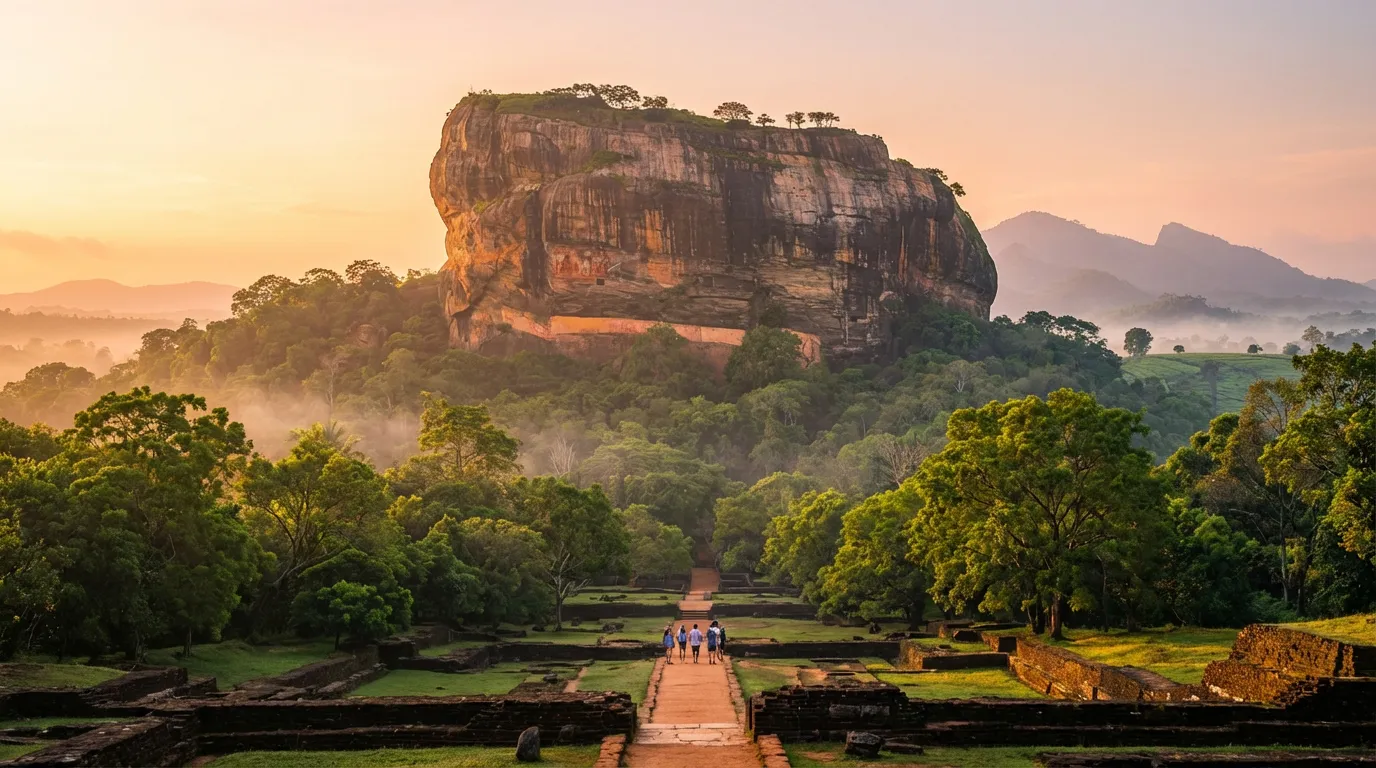
A popular starting point for an afternoon safari, especially after a morning visit to Lion Rock.
Habarana
A practical base for flexible elephant safaris in Minneriya, Kaudulla or Hurulu.
Polonnaruwa
A suitable combination for travellers who want to bring together cultural monuments and nature experiences.
Journey times depend on your accommodation, the chosen park entrance and traffic conditions. If the safari operator changes parks at short notice, the transfer route may also change.
Can you combine Sigiriya with an elephant safari?
Yes. An early-morning visit to Sigiriya Lion Rock can be combined with an afternoon elephant safari.
Visit the rock as early as possible to avoid the strongest midday heat.
After the descent, there is time for a lunch break and the transfer to the safari departure point.
If you plan both activities on the same day, leave enough time between them. A late safari departure can significantly reduce your viewing time in the late afternoon.
For a flexible combination of culture and safari, find more planning advice in our guide to a private Sri Lanka tour and our 10-day tour with a private driver.
Sustainable wildlife tourism: Why the Gathering needs protection
The Minneriya Elephant Gathering shows how closely wildlife living conditions are linked to water management, agriculture and conservation.
The historic reservoir does not serve wildlife alone. It is part of a water landscape managed by people.
When water levels and the available grassland change, the distribution of elephants changes too.
What does water management mean for the Gathering?
The 2021 study by Karunatilaka, Pilapitiya and Wijesinghe provides important scientific background.
Their observations suggest that the extent of available grassland plays a significant role in elephant numbers at the reservoir. Changes in the water regime can therefore affect the ecological basis of the Gathering.
Appropriate management decisions are essential for long-term protection.
Nature tourism alone cannot solve these ecological problems.
How can tourists act responsibly?
Visitors can contribute primarily by choosing responsible operators and considering their own behaviour.
A good safari operator maintains sufficient distance from wildlife, respects park rules and puts the safety of people and animals above spectacular close-up photographs.
Realistic expectations also help. A safari observing ten undisturbed elephants can be more ecologically responsible and photographically rewarding than watching a group of fifty under pressure from vehicles.
In the long term, animals, naturalist guides and visitors all benefit from tourism that respects natural habitats.
Frequently asked questions about the Minneriya Elephant Gathering
When does the Minneriya Elephant Gathering take place?
The Minneriya Elephant Gathering traditionally takes place during the dry season between July and September. August and September are often considered particularly favourable months. Depending on rainfall, water levels and food availability, larger gatherings may form earlier, later or in neighbouring Kaudulla National Park.
How many elephants can you see in Minneriya?
Several hundred elephants have been recorded at particularly large historical Gatherings. Figures of 200 to 300 animals are often mentioned. However, actual numbers vary considerably and may be much lower during an individual safari. A specific number of elephants cannot be guaranteed.
Is an elephant safari in Minneriya safe?
When conducted responsibly, a safari is a wildlife experience that can be planned carefully. Nevertheless, wild elephants remain potentially dangerous. Visitors must stay in the vehicle, follow their guides' instructions and keep sufficient distance. Direct approaches and blocking elephant paths should be avoided.
Is Minneriya better than Kaudulla?
Minneriya is traditionally best known for the Gathering in July, August and September. Kaudulla may offer better viewing conditions at other times or when water levels change. Choose based on the most recent local sighting information available, rather than the calendar month alone.
Can you see the Elephant Gathering all year round?
No. The Gathering itself is a seasonal phenomenon. Individual elephants and smaller groups may also be observed outside the traditional months. Large concentrations depend on the food and water sources available at the time.
What is the best time of day to see elephants in Minneriya?
Late afternoon is often particularly favourable. As the heat eases, elephants frequently move from wooded areas onto open grassland. A morning safari can also be interesting, especially for birdwatching, but does not necessarily offer the same chances of seeing larger elephant groups.
Do you need a guide for the safari?
Visits usually take place in an authorised safari Jeep with a driver who knows the area. An additional qualified naturalist guide can help you understand elephant behaviour and observe responsibly. Confirm with the park or safari operator which accompanying staff are required.
Can children join a Minneriya safari?
A Jeep safari can generally be suitable for families. However, children should be seated securely, supervised and able to follow the driver's instructions. For very young children, parents should consider the heat, journey length, possible jolts and the specific safety arrangements.
Do you need a reservation?
Booking a Jeep early is advisable, particularly during popular travel months. Before finalising arrangements, check whether the operator can adjust the destination park according to current sightings. Entry fees and permits should be covered by a transparent booking agreement.
Is the Minneriya Elephant Gathering worth visiting?
The Minneriya Elephant Gathering is one of Sri Lanka's most remarkable nature experiences. Particularly between July and September, there is traditionally a chance to observe large numbers of wild Asian elephants along the open shores of the Minneriya reservoir.
The appeal lies in the animals' natural behaviour, the expansive landscapes and the rare opportunity to see large groups in the wild.
Anyone planning a safari should remain flexible. The distribution of elephants can change between Minneriya, Kaudulla and Hurulu. Recent sightings, water levels and responsible safari practices therefore matter more than rigid travel promises.
With an experienced naturalist guide, enough observation time and a respectful distance, an elephant safari becomes an encounter that puts wildlife welfare first.
Plan your safari and Cultural Triangle visit together
We check recent sightings, coordinate your Jeep and transfers, and combine the safari with Sigiriya, Dambulla or Polonnaruwa.
Request a safari proposalSources and further information
The following sources provide scientific background and information on regional seasonality and Asian elephant conservation.
- Sri Lanka Tourism Promotion Bureau: Minneriya National Park. Information on the national park, historic reservoir and seasonal Gathering.
- Karunatilaka, M. D. S. I., Pilapitiya, S. & Wijesinghe, M. R. (2021): The World-Renowned Annual Elephant Gathering in Minneriya, Sri Lanka: Will It Endure?. Gajah, Volume 54, pages 16–23. A study of water levels, grassland and elephant numbers.
- IUCN Red List of Threatened Species: Elephas maximus, Asian Elephant. Conservation status and scientific background.
- Sri Lanka Tourism: Great Elephant Gathering in Minneriya and Kaudulla. Documentation of seasonal elephant movements between the protected areas.
Information current as of October 2026. Seasonal guidance is based on documented typical patterns and does not replace confirmation of recent sightings. Entry fees, access rules and safari conditions should be checked immediately before visiting.